
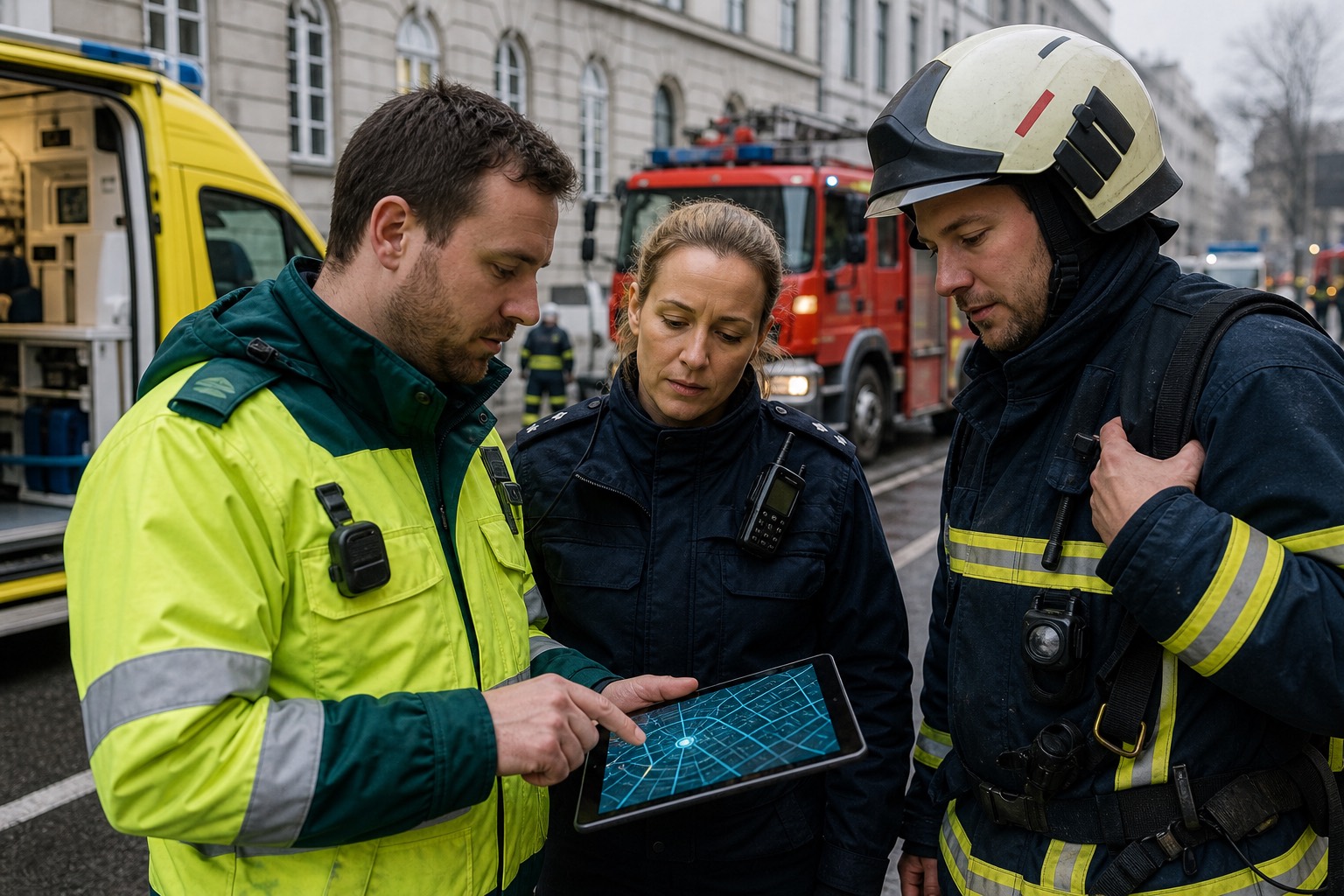
There was a time when 112 Day was mostly a communications event. You would see awareness materials, social posts, and short reminders that 112 works across Europe. That public-facing mission is still important, but something else has changed in recent years: technical and operational teams now treat 11 February as a hard checkpoint for system readiness.
The reason is straightforward. Emergency communications are no longer just about whether a voice call can be connected. Modern emergency response depends on data quality, routing logic, cross-network interoperability, and operational discipline. If any one of those components drifts out of alignment, outcomes degrade quickly, even when the public-facing service appears healthy.
In practical terms, 112 Day has become an annual audit moment. Leaders ask difficult questions. Are location pipelines still accurate in high-risk edge cases? Are cross-border assumptions still valid? Are accessibility workflows tested with the same rigor as voice? Are recurring incidents being eliminated, or merely documented and deferred?
That last point matters more than many dashboards admit. In emergency programs, unresolved repeat failures are rarely random. They usually indicate structural issues: unclear ownership, weak release governance, fragmented incident response, or poor data stewardship. A mature program uses annual checkpoints to force those problems into decision space.
What mature programs actually measure
The strongest teams do not rely on high-level confidence statements. They track evidence that reflects operational reality. Typical examples include location-confidence rates in real environments, severe defect closure latency, runbook rehearsal completion, and unresolved risk backlog aging.
Just as important, they report these metrics in language that non-engineering decision-makers can understand. Technical detail remains available, but the headline is clear: what improved, what did not, and who owns the next move.
Editorial perspective
If you want one litmus test for seriousness, look for ownership clarity. Symbolic reporting often describes intentions. Operational reporting names people, deadlines, and risk thresholds. One informs; the other governs.
Programs that combine public communication with internal accountability tend to move faster and recover faster. They also build trust with stakeholders who must make difficult funding and policy decisions under uncertainty.
Why this matters for NG112 readers
For teams involved in NG112 modernization, 112 Day offers a predictable annual anchor to reset priorities around measurable service quality. It is an opportunity to shift from campaign language to delivery language.
If your organization does not yet run a formal readiness review on or around this date, start simple: define five indicators, publish baseline values, assign owners, and commit to an annual update. Consistency will do more for resilience than a perfect framework launched too late.